
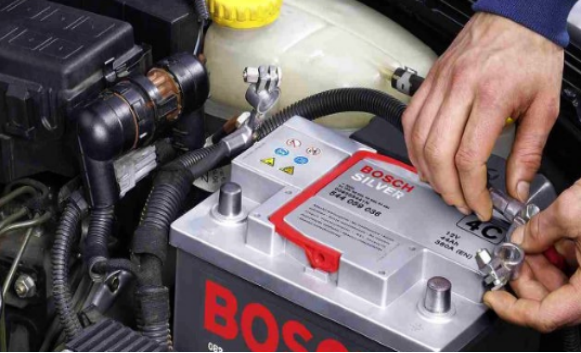
A “fully charged” EV isn’t the same as a “fully ready” EV — the small 12V battery is the unsung gatekeeper that has to be healthy for anything else to work. The fix isn’t complicated: keep it topped up, don’t let charge run too low before a long trip, and give it the same basic care you’d give any car battery. A little bit of holiday prep can save you from a very unwelcome surprise.
The Hidden EV Problem Nobody Warns You About: A Flat 12V Battery After Your Holiday
You’ve done everything right. Before jetting off on holiday, you plugged in your EV, waited for that satisfying 100% charge notification, and drove off to the airport with peace of mind. Two weeks later, you land, grab a taxi home, walk up to your car… and it won’t unlock. The doors are dead. The screen is blank. Your fully charged EV has locked you out.
Sound far-fetched? It isn’t. It’s one of the most common — and most misunderstood — problems EV owners run into, and it has nothing to do with your main battery pack.
Wait, I thought EVs didn’t have a “normal” battery?
Here’s the twist: every electric vehicle actually has two batteries.
- The high-voltage traction battery— the big one that stores energy and powers the motor. This is the battery everyone talks about, the one on the charging percentage display.
- The 12V battery— a small, low-voltage battery similar to the one in a petrol or diesel car. This quietly runs everything else: the door locks, the infotainment screen, the sensors, the alarm system, and — crucially — the onboard computer that “wakes up” the car and tells the high-voltage system to do anything at all.
Think of the 12V battery as the car’s nervous system, and the big battery as its muscles. If the nervous system goes down, it doesn’t matter how much energy is stored in the muscles — nothing responds.
So why does the 12V battery drain even when the car is “fully charged”?
While your EV is parked, it isn’t fully asleep. In the background, various systems quietly sip power from the 12V battery:
- Security and alarm systems keeping watch.
- Sensors and immobilisers staying alert.
- The car periodically “waking up” to check on itself.
- Telematics and connectivity features (the ones that let your phone app talk to the car)
- You are checking the app repeatedly to peek at the charge level — yes, this counts too.
Normally, this isn’t an issue. On a car that’s driven regularly, the 12V battery gets topped up automatically from the main battery each time you drive. But leave the car sitting untouched for a couple of weeks — say, while you’re on holiday — and the small trickle of background drain can add up faster than that top-up cycle happens. Eventually the 12V battery dips too low to power the door locks or boot up the onboard computer, and you’re locked out of a car that, ironically, still has plenty of charge in its main battery.
Cold weather makes this worse too since low temperatures reduce a 12V battery’s effective capacity.
The good news: it’s easy to prevent
None of this means EVs are unreliable — it just means the 12V battery deserves a bit of attention, especially before you go away. Here’s some friendly, practical advice:
Before you go on holiday
- Check your owner’s manualfor manufacturer-specific guidance — some brands recommend leaving the car plugged in, others don’t, and a few suggest disconnecting certain features.
- Leave it plugged in if you can.Being connected to a charger (even without actively charging) often keeps the 12V battery topped up in the background on many EVs.
- Don’t leave the main battery very low.Aim to park with a moderate-to-high charge rather than close to empty — some EVs stop supporting the 12V system properly at very low charge levels.
- Resist the urge to check the app constantly.Every time you ping the car to check its status, you wake it up and draw a little power. A couple of checks a day is fine; checking every hour isn’t.
If you’re going away for a long time (a few weeks or more)
- Ask a friend or neighbour to start the car brieflyevery week or two if it’s parked at home, just to let the systems cycle and top up.
- Consider a trickle charger/maintainer for the 12V batteryif the car will sit for an extended period, especially over winter. These are inexpensive and widely available.
- Check whether your car has a “long-term parking” or “transport/storage mode”— some manufacturers include a setting specifically for this scenario that reduces background power draw.
General 12V battery health tips
- Keep an eye on its age.Like a conventional car battery, the 12V unit is a wear item and typically needs replacing every 3–5 years, sooner in hot climates.
- Frequent short trips are hard on it too— the same way they are for petrol cars, short journeys don’t give the system enough time to fully top the 12V battery back-up.
- If your car ever gives a 12V battery warning, don’t ignore it.It’s a small, inexpensive part — replacing it proactively is far less hassle than a lockout.
- Know your manual override.Most EVs have a physical key hidden in the fob, or a manual release mechanism, plus a way to jump-start the 12V system from outside the car (often via a socket under the bonnet/frunk). It’s worth knowing where these are before you need them, not after you’ve landed from a long flight.
At Optimum EV Solutions, we help residential, commercial, and fleet customers design and maintain EV charging solutions that support efficient, dependable electric transportation.
If you’re looking to optimize EV charging infrastructure or improve fleet performance, our team is here to help.